
HOLLYWOOD, APPROPRIATION, AND THE AFRICAN ACCENT
Pt. 1
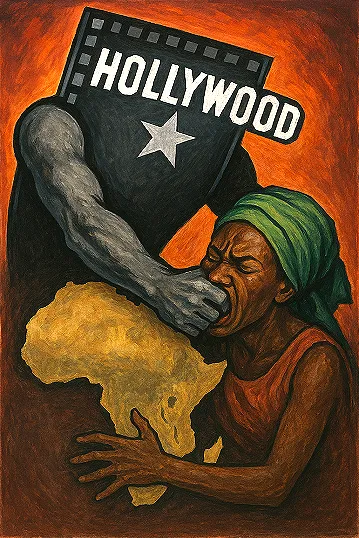
On October 5, 2021, Tayo sent in her submission for a voice acting audition. It was for an animation project with a brief that fit her skills so naturally, she was excited to be invited to audition. 6 weeks later, she was invited to a live recording for the project where she was offered the role and told to expect the required documentation as soon as possible.
Anyone in this line of work would understand that this means she had been tapped for the project. Unfortunately, that was the last time Tayo heard from the folks on anything. Months go by and all her emails are left without a response from the client. She reached out a few times to check in. No response.
Almost two years after she gave up contacting the team, she stumbled across an announcement of the project launch. On further investigation, nothing had changed. The character description and reference remained the same and so did the story. The only thing that had changed in the project was the delivery of the character which was a direct opposite and someone else was tapped for the job but she was never notified.
Sadly, Tayo’s case is a common one but this is not an editorial on why voice actors don’t get the gigs they’re tapped for or why creatives experience blatant silence or poor communication even after their auditions or interviews are successful. What was apparent in this case was the fact that the choice made for this animation character in no way portrayed the character reference described in the brief. There could be a myriad of reasons for these choices but the main problem is when a character and its reference remain the same, but then the portrayal is unoriginal or simply, a direct opposite.
Here is another story also based on actual events. A western movie production company wants to create a motion picture in English about an iconic African leader known for her or his struggles in dismantling societal ills and setting the pace for exemplary governance and global leadership. After auditioning, pre-production, production, post production and finally distribution, the African leader is played by an individual who just falls short of an authentic portrayal. Alright, maybe the actor nails the physical attributes, certain mannerisms but there is a huge miss in dialogue delivery due to flawed accents. Sound familiar? Does any Hollywood feature come to mind? If any in particular crossed your mind, chances are they fall into this category.
Now, let’s explore what dialogue deliveries due to flawed accents are, and how it becomes cultural appropriation in Hollywood.
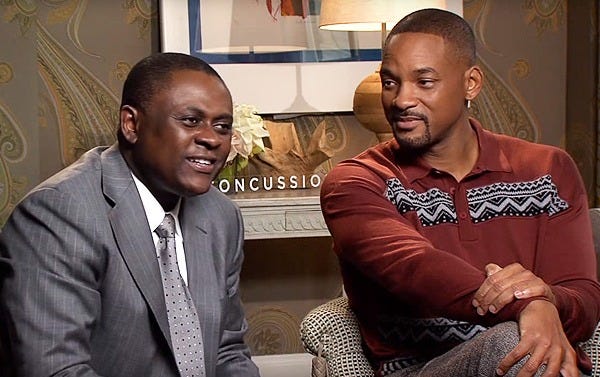
Dialogue, especially in film, is one of its most important elements because of its ability to draw in the audience by providing authentic conversation and making the plot more believable. (Barowski)
An accent is a distinctive mode of pronunciation of a language, especially one associated with a particular nation, locality, or social class. We hear this every day and can identify it easily. An accent is said to be flawed when word delivery for a dialogue is pronounced incorrectly or overtly exaggerated.
Cultural Appropriation is commonly used to identify when the imagery, fashion, practices, music, or artifacts of a culture are removed from their original context. The significance is ignored and they are taken and used by someone else. (Butler)
Cultural appropriation is when cultural elements are taken, copied or used outside of their original cultural context- especially without showing an understanding or respect of said culture. The action or instance of cultural appropriation is more glaring in reality. Cultural appropriation was first used in academia to discuss colonization and power dynamics between cultures, majority and minority groups, societal structure and interstate relations.
There are four types of Cultural Appropriation: exchange, dominance, exploitation, and transculturation. (Rodgers, 2006)
Voice overs are a narrated, spoken or voiced piece of audio or sounds created and recorded by a voice talent which is used for various purposes.
The history of voiceovers are as old as civilization itself. It dates back to around the 8th century BC, where town criers were the very first to do voiceover work. They gained attention from crowds through making public announcements. These individuals have existed everywhere in the world, essentially being the means of communication and information with communities and townspeople.
In Africa, town criers are well-known, honorable individuals who served as the key disseminators of information. They regularly served as mouthpieces of the rulers of the respective communities using certain percussion instruments such as a drum, to draw the attention of people.
In other parts of the world such as in Europe and Asia, bells were the instrument of choice for the town criers of the 15th century. They announced market days, made proclamations from rulers and read out punishments for crime and criminals during executions. They performed this by calling out and most times screaming at the top of their lungs, these announcements while also gaining the attention of the people by ringing bells.
With the invention of the Phonograph in 1877 by American inventor and businessman- Thomas Edison, voiceover work evolved. The Phonograph was the very first technology that was successful at sounds, voice recordings, and playback.
This technology has improved and was used in Gramophones and the lateral-cut flat disc record called the “gramophone record”. German-American Inventor Emile Berliner invented this and he founded the United States Gramophone Company in 1894. Audio and electronic equipment such as turn-tables, arm systems and pick-up systems are also based on the Phonograph technology. (Farwell et al.)
By 1900, Reginald Fessenden, a Canadian, went to the U.S. to work for Thomas Edison. Fessenden first transmitted voice over radio signals between two towers a mile apart in Maryland. The signals were not clear and it was difficult to hear what was being said, but it proved that voice could be transmitted over radio.
After 6 years of arduous work, on December 24, 1906, Fessenden began his broadcast from Massachusetts and was heard as far away as Norfolk, Virginia. The broadcast included verses from the Gospel According to Luke, an Edison phonograph playing a recording of Handel’s “Largo” aria, a violin rendition of “O Holy Night” played by Fessenden and ended by wishing listeners a Merry Christmas. A similar broadcast was sent out on New Year’s Eve. (National Park Service) He was later known as the “Father of Voice Radio”.
It is apparent that technological advancements had taken place regarding voice work and voice overs and its science regarding recording, transmitting, and playback, also with global commerce it was revolutionary.
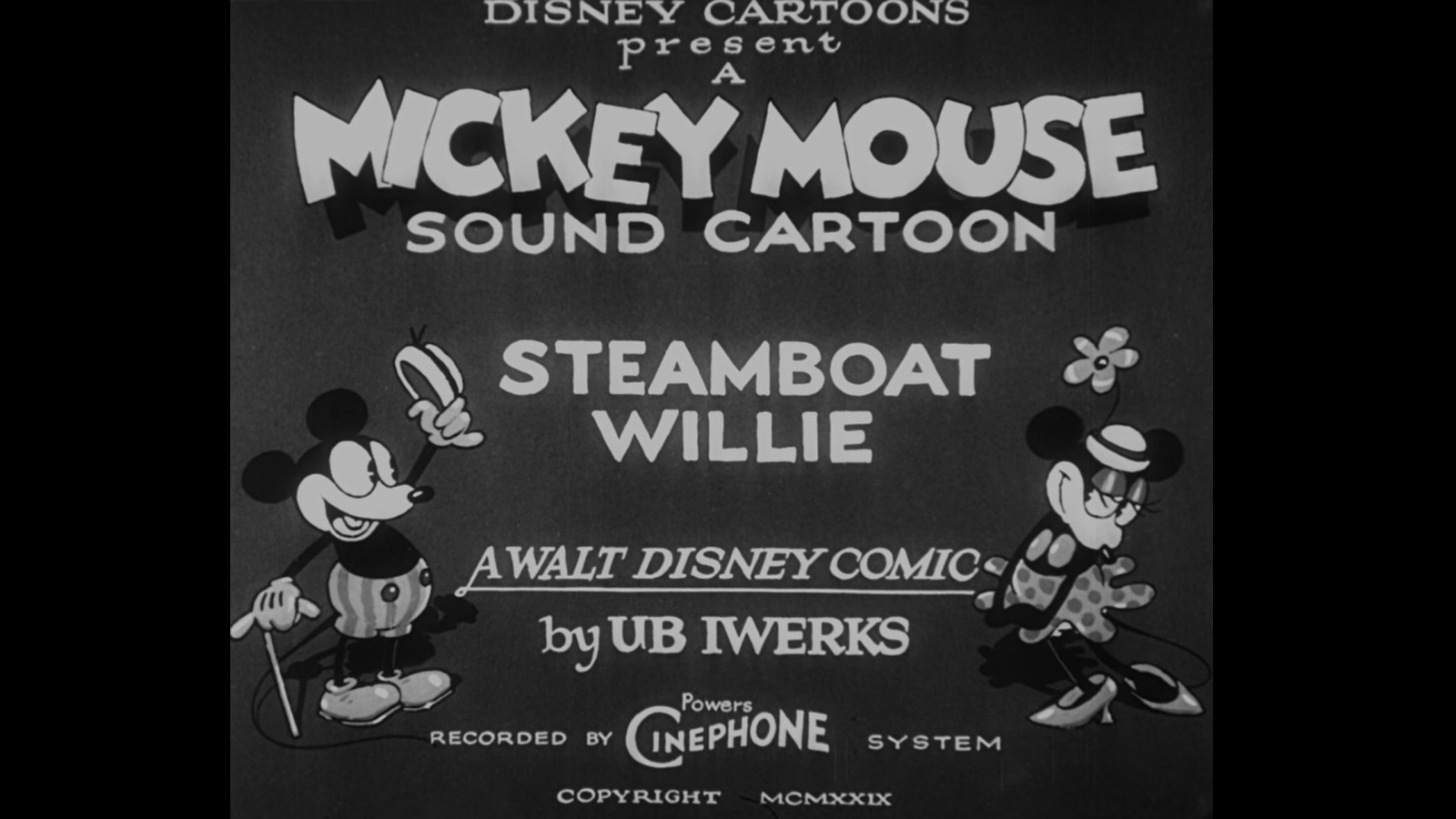
22 years later, Walter Elias Disney, an American animator, entrepreneur, film producer and voice actor, created an animated short film titled- Steamboat Willie. This was 1928, and it was the first time characters came to life with a synchronized voice. Walt Disney himself did the voice for Mickey Mouse, a task in which he took especially pride. He remained the official voice for the character until 1946 and continued to do occasional voice-overs for him until his passing in 1966. (Outspoken Voices)
From the 60’s till date, there has been a demand for voice overs in sectors such as the animation industry, brand marketing, radio, television and digital broadcasts. In 2024, the voice-over industry had a market value of over USD 4.4 billion. It is projected to reach USD 4.9 billion by the end of 2025. It is important to note that the region that has the largest share of this industry is North America with 55%. The other 45% is split between Europe 25%, Asia 15% and the rest of the world 5%. (Michaels)
The relevance of the voice-over industry cannot be overlooked in the world of today and in the world of the future; but there is a problem. As the world inches to its future daily, there is a constant undeniable need for authenticity and genuine experiences that open up new avenues for positive and progressive creative expression. This can only be met by broadening the scope of the global voice over industry, of course where it applies, and where it is needed.
This is where Hollywood, in an attempt to meet this need, miscarries most of the time.
To be continued…
Hi, this is a comment.
To get started with moderating, editing, and deleting comments, please visit the Comments screen in the dashboard.
Commenter avatars come from Gravatar.