
Pt. 2
Finally, Africa and its stories have influenced and shaped narratives by educating the rest of the world about it through its playwrights, authors, novelists and screenwriters. Wole Soyinka, Efua Sutherland, Ama Ata Aidoo, Ayi Kwei Armah, Olaudah Equiano, Flora Nwapa, Chinua Achebe, Alain Mabanckou, Cyprian Ekwensi, Amos Tutuola, Ngũgĩ wa Thiong’o, Vincent Chukwuemeka Ike, and, most recently the popular Chimamanda Ngozi Adichie are authors, novelists, and writers from different African countries with works that are known to have made significant global contributions to the world of literature, theatre, and media.
What their work has done over the years has challenged assumptions and outdated narratives (especially Western ones), educating non-Africans and displaying the various dynamics and perspectives of African culture and identity.
Whenever Hollywood needs African narratives to depict, explore, and portray, at the very least, the aforementioned are the names to start with. Communication, interaction, and content creation are all intertwined these days, making it less difficult to make contact with cultures across the world and touch base with these cultures.
At the time of writing this publication, there is news of a global literature luminary of Nigerian origin whose most popular book is about to be adapted to the screen for the second time, and the individual who is to shoulder the main character is not Nigerian. Let us wait and see.
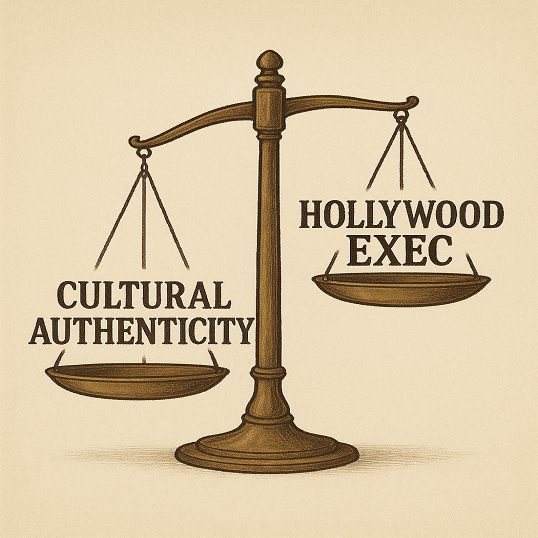
Hollywood executives create motion picture productions for 2 major reasons: The first is to inform/entertain and the second is to make profits. Truth be told, many times, the latter reason takes over the whole production and skews the intentions of the first. A capitalist approach begins to take over the production itself and its cultural value begins to get muddled up. Of course, there is also the perspective of the Hollywood executive who invests into the creation of the motion picture production, but if the work must be done, it should be done properly, to the best of their ability.
This means actually sourcing for real people who are of that indigenous culture. Real actors, voice actors and directors, language coaches, and professionals from said culture. Pay them what they deserve, put them to work, and see your production truly resonate with the world by true representation, storytelling, and genuine reactions! For the investors, they receive a return on investment, and everyone wins.
This is the only way the miscarriage of African portrayals in Hollywood productions can be stopped. This is how any cultural portrayal in productions from Hollywood should be approached. For as much as profit-making is imperative to the Hollywood executive, accurate portrayal of culture by the filmmaker is important in protecting the sanctity of the culture of a people.